


Green Up or Give Up? How to Evaluate Winter Injury and Protect This Year’s Forage Yield

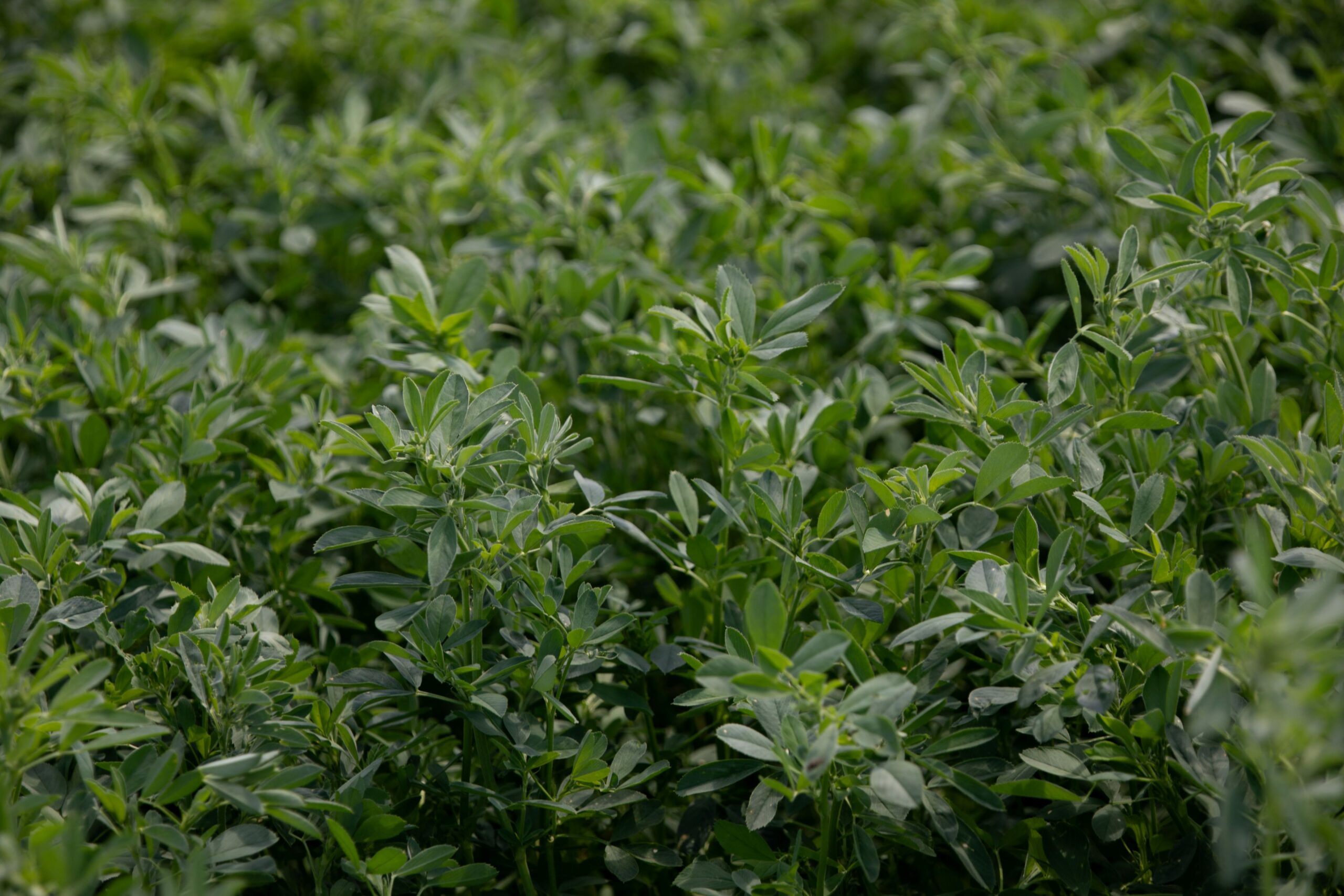
Spring green-up is the first opportunity to accurately assess forage stand health following winter stress. Under typical conditions (adequate snow cover, minimal ice sheeting, and limited desiccating winds), winter injury in alfalfa and cool-season grasses is uncommon. However, prolonged ice cover and freeze-thaw cycles, which were prevalent across portions of the Upper Plains this winter, increase the risk of crown injury, root damage, and stand thinning. Fields that don’t exhibit uniform green-up should be evaluated promptly to determine appropriate management or renovation strategies.
Native rangeland and long-established pastures rarely experience complete winterkill due to species diversity and deep root systems. Alternatively, alfalfa and introduced cool-season grasses are more susceptible. Species such as orchardgrass, tall forage fescue, perennial ryegrass, timothy, and meadow fescue commonly exhibit reduced plant density following severe winters, especially on poorly drained or compacted soils.
Stand Assessment Guidelines
Stand evaluations should be conducted once regrowth reaches 2 to 4 inches in height. Evaluate plant density, crown health, and uniformity across the field.
Alfalfa stand density benchmarks:
- More than 15 plants/ft²: Stand is considered productive, no renovation needed
- 8 to 15 plants/ft²: Marginal stand, yield potential reduced, consider interseeding
- Less than 5 plants/ft²: Stand failure, renovation or rotation recommended
Stem counts may provide a more accurate yield estimate than plant counts. Fields producing fewer than 40 stems/ft² typically experience significant yield loss.
Where winter injury is severe and plant density falls below economically viable thresholds, terminating the stand and rotating out of forage production is often the most agronomically sound decision. In alfalfa systems, residual nitrogen credits can contribute 50 to 100 lb N/acre to a subsequent corn crop, partially offsetting the cost of reestablishment.
Older stands with significant thinning may be economically maintained for one additional production year through strategic interseeding of annual forages. Early spring planting of cool-season cereals like forage oats or forage barley can significantly improve first-cut yield and forage supply. These species establish rapidly and complement early alfalfa growth.
Italian ryegrass is a valuable addition in this system due to its aggressive tillering, high forage quality, and strong regrowth potential. When interseeded, it contributes forage across multiple cuttings without significantly suppressing alfalfa production.
If early-season forage production is inadequate, warm-season annuals can be introduced following first cutting. Pearl millet and Japanese millet are well-suited for June overseeding, and will re-grow to provide two cuttings of forage alongside the thinning alfalfa.
Young alfalfa stands (established within the previous year) that exhibit reduced density may be interseeded with alfalfa to restore productivity. Beyond the first production year, autotoxic compounds released by existing alfalfa plants inhibit germination and root development of new alfalfa seedlings, making reseeding ineffective.
In stands older than one year, interseeding should focus on compatible species. Improved varieties of medium red clover have demonstrated the ability to maintain forage quality and yield when mixed with alfalfa for two to three years. Persistent cool-season perennial grasses like meadow fescue, orchardgrass, and tall forage fescue can stabilize stand density, improve traffic tolerance, and extend productive stand life.
Early stand evaluation is critical to maximizing forage system efficiency. Delayed decision-making often results in suboptimal yield, poor forage quality, and inefficient land use. Strategic renovation, whether through rotation, annual forage integration, or interseeding, allows you to maintain productivity while aligning forage supply with livestock nutritional requirements.


