

By the time May rolls around, things are either looking really good, or you’re already making backup plans.
After working through April’s “green up or give up” decisions, May is where the rubber meets the road for cow/calf producers. Pastures are taking off (or trying to), pairs are out, and now it’s all about turning that early growth into usable, efficient pounds. Let’s talk about how to make the most of what you’ve got.
Grass is growing, don’t waste it.
That first flush of spring growth is easy to get excited about, but it’s also easy to misuse. Turning cows out too early or leaving them in one spot too long can set your pasture back for the rest of the season. Those plants are trying to establish leaf area and root mass at the same time. Graze them too hard now, and you’ll pay for it in July. A good rule of thumb is to start grazing at 6 to 8 inches and pull cattle off around 3 to 4 inches. That might feel conservative, but leaving residual is what keeps regrowth fast and consistent. Think of it as protecting your future grazing days, not just maximizing today.
Rotation isn’t fancy, it’s practical.
You don’t need 20 paddocks and a spreadsheet to rotationally graze. Even a simple system like splitting a pasture in half or thirds can improve forage utilization, increase regrowth speed, stretch grazing days, and keep quality higher for those nursing calves.
If you’re continuously grazing one big pasture, cattle will cherry-pick the best plants and repeatedly hit them. Meanwhile, everything else gets mature and stemmy. Rotation evens that out. And in a year where conditions might still be uneven coming out of winter, that flexibility matters.
Thin spots? Fill the gap.
If April revealed some rough patches (winterkill, thinning stands, or just tired pasture), May is your window to respond. Instead of accepting lower production, this is where annuals can quietly save the day.
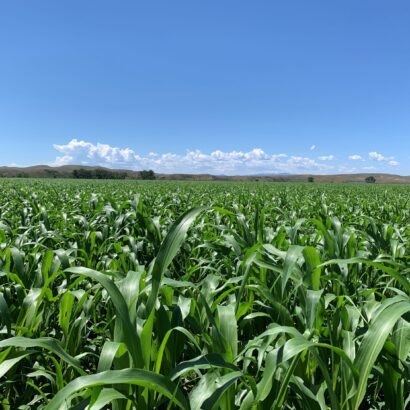
Cool-season annuals (like oats or triticale) can still add tonnage if moisture cooperates. Warm-season options (like pearl millet) are right around the corner and can carry you through summer. The key is to think of these as support tools, not last resorts. A little strategic seeding now can take pressure off your perennial pasture when it matters most.
New pasture? Set it up right.
If you’ve got acres going into new pasture this spring, May management matters just as much as planting conditions. A few reminders that are easy to overlook in the chaos of spring:
- Seed shallow. Those small seeds don’t need much depth.
- Prioritize seed-to-soil contact over speed.
- Be patient on first-year grazing.
It’s tempting to “just turn them out quick,” especially if forage is tight elsewhere. But giving that new stand time to establish pays dividends for years, not just this season.
Keep one eye on June.
May often feels like abundance, but June decides if that abundance lasts. As you’re grazing now, start thinking ahead:
- Do you have a plan if moisture shuts off?
- Where could you plug in a warm-season annual?
- Which pastures need rest to carry you later?
The producers who stay ahead of the curve aren’t reacting in July, they’re adjusting in May. There’s a lot happening this time of year, and pasture can easily become “set it and forget it.” But the reality is, a few small decisions right now (when to turn out, when to move, where to add support) have an outsized impact on your entire grazing season.
You don’t need perfect conditions. You just need to stay a step ahead of them.